News
Sep 25, 2026
The delegate IPC path is now correct under stress. (landed
Sep 10-24) A run of hard, rare bugs in the kernel’s syscall-delegation
path were found and fixed, each one first pinned by a failing test that
reproduced it. Stray replies from a previous claim on the same slot
could be accepted as answers to the current one – the reply gate now
carries a per-claim generation witness, so a same-identity stale
reply is rejected rather than handed to the wrong caller (this is what
used to surface as the nonsensical “cannot open standard fds” boot
failure). A publish-then-save race between a delegate becoming visible
and its context being written was closed with a lock-first save and a
parked-wake handshake. A double convTnoptr boxing in the request path
was delivering zeroed requests. And a shepherd lookup that failed to
read the table was reporting “no such shepherd” rather than “I could
not tell” – a failed read is not absence.
ARM64 assembly hygiene, and the one-hex-digit bug it caught.
(landed Aug 3) Four of the kernel’s IRQ save/restore routines were
independent hand-written copies, two of which hand-encoded the DAIF
system register as a raw WORD. One digit was wrong: op2=0 is NZCV,
op2=1 is DAIF, so the “mask interrupts” instruction was reading the
condition flags. Hand-encoded words hide that from the assembler and
from review. The four copies are now one, in a new ksync package,
written in mnemonics – and the tree carries build gates that reject
WORD-encoded DAIF, barrier, and HINT operations outright, so the
class cannot come back. Along the way the idle paths gained a real
WFI and a fix for a lost-wakeup window.
ext2 reads got 16x cheaper. (landed Aug 2) Reading a 64 KB chunk
through a double-indirect ext2 block map cost 49 device round trips.
Batched ReadAt plus per-handle caching of the indirect blocks brings
that to 3.
Boot splash, and a scheduler that speaks in milliseconds. (landed Aug 3-4) The boot splash is back: the image ships as an ESP asset, diplomat hands it to the kernel through new auxv entries, and the kernel paints it during GPU init. Separately, scheduling policy is now expressed in wall-clock units and tick counts are derived from them, instead of the config file quoting timer ticks – a config that silently meant something different whenever the tick rate changed.
Lowlight
The page-table accessed/dirty sweep was eating the machine. A
periodic sweep over the page tables turned out to be roughly seventy
points of CPU on an idle system. Making it hole-aware (skipping
unmapped regions at table granularity) helped; measuring it honestly
did not, so it is now gated off by default behind ad_scan_enabled.
The underlying cost of a single tick is still too high and remains
open. Not every performance story ends with a clever fix – sometimes
you just stop doing the expensive thing until you understand it.
Jul 23, 2026
Fork and exec work. (landed Jun-Jul) mazarin can fork a process
and exec a new program in the child. The mechanism is a kernel-emulated
vfork plus a private clone_exec syscall that performs the combined
clone-and-exec atomically, so there is never a half-built child to
race against. Around it sits a real process model in the linux
shepherd: a monotonic PID allocator, a per-PID record table, a
notification ring that delivers child-exit to the parent, wait4 with
deferred reply parking, pipe2, dup3, fcntl(F_SETFD), and
O_CLOEXEC honored end to end through an FD table lifted into its own
package. The shepherd limit went from 32 to 256 in the process.
Getting it stable took most of two months of races: an FD table whose
identity aliased between vfork parent and child, an intent-visibility
window during clone setup, parent wake-ups lost on exec failure paths,
stale delegate replies arriving for a PID that had already been
recycled. The root cause of the last long-standing hang was ordering –
the vfork child’s FD table has to be finalized before CloneExec,
not after.
Memory corruption, three separate mechanisms. (landed Jul 23)
A long-running corruption hunt closed with three unrelated fixes: a
deferreturn value of zero in mazlink-produced modules (fixed by
retargeting the PLT rather than trusting a lazily generated pclntab),
a uring teardown that raced its own state lock, and a page-descriptor
refcount race on shared pages. A ten-run, three-minute-each soak
afterwards showed no corruption markers at all.
Per-SID ordered dispatch in the file lane. (landed Jul 6-16) The linux shepherd’s file lane now dispatches with same-sender FIFO ordering and mutual exclusion per sender, with oldest-ready-sender fairness across senders, plus a permanent canary that fires if an inversion ever occurs.
Jun 15, 2026
x86_64 stability: the g register has two homes. (landed Jun
8-20) A family of crashes unique to amd64 – morestack on g0,
priority-wake stalls, mysterious faults after a suspended handler
resumed – all came back to the same thing. On amd64 the Go runtime
keeps the current goroutine pointer in two places, R14 and TLS at
FS_BASE-8, and kmazarin’s exception save/restore only preserved one
of them. Restoring a context could therefore resume a thread whose two
homes disagreed. The fix captures and restores both, at every site, on
both the user and kernel paths, and a frameaudit build gate now
keeps the frame layout honest. ARM64 was never affected – it has a
single home in R28.
Two more x86-only exception bugs. (landed Jun 10-15) Resetting
TSS.RSP0 to a fixed top on every entry trampled the frames of
suspended syscall chains; the fix rotates both the IST pointers and
RSP0 through cursors. And a single global exception save-state was
being clobbered by nested exceptions; each exception frame now mirrors
its own state, the way ARM64’s trap frame always did. A durable
invariant fell out of the investigation and is now enforced: kernel
main must never gopark.
A page fault that re-enabled interrupts. (landed Jun 2) On
ARM64, the synchronous-exception return path unconditionally cleared
the interrupt mask bit in SPSR. A page fault taken while the
scheduler lock was held would therefore return with interrupts
enabled, and the next timer tick would deadlock the machine. The
clear is now conditioned on returning to EL0. The same investigation
made the buddy allocator’s spinlock IRQ-atomic and added a detector
that shouts if the scheduler lock is ever taken with interrupts on.
Constraint-system fixes in mancini. (landed Jun 4-15)
ColumnEdgeToEdge now computes its virtual height as a live
constraint chain rather than a one-shot value, resetting a child’s X
no longer stomps a live constraint, and a kernel-attribute leak in
AddI64/ChildAfterI64 is fixed.
Apr 28, 2026
A patched Go linker for true Go-only plugins. (landed Apr 18) Stock
Go’s -buildmode=plugin produces a shared object that falls back to the
system linker (/usr/bin/ld) at load time – a nonstarter for an OS
that has no system linker. mazarin now ships a fork of cmd/link (and
a small piece of cmd/go) that emits a relocatable, self-contained
.maz plugin which loads at runtime through mazarin’s own loader. The
plugin emits UNDEF dynsym entries against the host’s runtime, a PLT and
GOT for resolution, and DT_NEEDED=mazarin-host. A
dlopen-host-packages.txt policy file declares which Go import paths
live in the host (chiefly runtime) so all other code ships inside the
plugin. This is the foundation that the rest of the plugin work below
rests on.
One shepherd binary (mazdl). (landed Apr 18-28) Every shepherd in
startup.toml is now a .maz plugin loaded by a single generic
/shepherd.elf host. The kernel-side SysLoadMaz and SysRunMaz
syscalls have been retired – mazdl (the runtime loader matched to
the patched linker above) is the only loader. The work spanned a Phase
4 funcval rewrite to fix cross-module function-value indirection, a
mazlink/mazgo userspace toolchain for building plugins, and a
chunked TransferPages path so the kernel can move large mappings
between shepherds without hitting the old 4096-page cap. fti, maildb,
and mail migrated from ET_EXEC to .maz over the second half of the
window; on Apr 28, launchShepherd’s legacy ET_EXEC body in the fs
shepherd was deleted – the disk no longer ships an .elf for any of
them.
Mail v2 – a working email client. (landed Apr 20-24) mazarin has
a real mail client, written from scratch in mancini. It uses a
GridTable interactor for the message list with virtual scroll over a
fixed slot pool of MailRow interactors – only as many rows are
materialized as fit on screen, and they are recycled as the user
scrolls. Keyboard navigation works (arrow keys, page up/down). Bodies
render in a WebInteractor HTML pane on click. The wire protocol is
mailproto, a HOT collection protocol (filters, sort orders, lazy
header fetch) backed by MessageStore and collectionStore data
structures.
Full-text search (fti + bleve). (landed Apr 15) A dedicated fti
shepherd owns a bleve scorch full-text
index. maildb hands documents to fti via uring IPC at import time;
mail can issue SearchMail queries through the same protocol and get
matching message IDs back. The index lives on tmpfs at /tmp (the
128MB off-heap ramdisk introduced in the Apr 3 entry).
Mail database (maildb) with mbox import. (landed Apr 13) maildb
is a userspace shepherd that owns a BadgerDB
database of mail messages. At boot it imports gmail mbox test data from
disk into BadgerDB and serves GetHeaders and GetBody requests to
the mail app over uring. The storage layer is what the mail v2 client
above is reading.
Go 1.26.2 migration. (landed Apr 20) The toolchain rebased onto
Go 1.26.2, with corresponding rebases of all three runtime overlays
(kernel, shepherd, userspace). One small but important wrinkle: Go
1.26 introduced RandomizedHeapBase64, which is incompatible with how
mazarin’s overlays compute span addresses; the build now sets
GOEXPERIMENT=norandomizedheapbase64 to opt out. Most overlay edits
were preserved verbatim in the rebase.
File-backed mmap with write-back. (landed Apr 13) MAP_SHARED
writable file-backed mmap actually works now. The linux shepherd’s
page cache demand-faults pages from ext2 on first access, and dirty
pages are flushed back to the file on munmap and on shepherd death.
This is what makes BadgerDB and bleve usable – both rely on
mmap-with-writeback semantics.
Window manager: decorations, drag, focus. (landed Apr 4-6) Rachel grew real window decorations: focused and unfocused title bars with distinct neumorphic styling, click-and-drag window moves with screen clipping (a window can’t be dragged off-screen), click-to-focus, and alpha-composited drag previews so the user sees what’s behind the window during a drag. The blit pipeline now batches VirtIO GPU commands per frame.
Lowlight
RISC-V removed. (Apr 24) We didn’t want to do this. Two facts
forced our hand. First, there is no open-source UEFI boot code we can
use for the RISC-V “virt” board in QEMU; we had been booting via
OpenSBI’s -kernel flag with a custom early path, but that path was
diverging further from arm64 and amd64 every week. Second, and more
fundamentally: the Go compiler cannot currently produce
position-independent code for RISC-V, which makes the new .maz
plugin model – and most of the architectural progress on this branch
– unworkable on RISC-V. We’ve deferred RISC-V support; the
architecture has been removed from the build, and the per-arch RISC-V
code paths in diplomat and kmazarin are gone. We’d love to come back
to this when the toolchain catches up. (Sad face.)
Apr 3, 2026
Uring IPC replaces mailbox. The mailbox IPC system described in the Mar 20 update has been completely replaced with an io_uring-style message passing architecture. This is not a refinement – it is a new IPC subsystem that touches every shepherd in the system.
The old mailbox was a minimal 1-to-1 notification channel: it could
deliver a small notification code and a ring buffer address, one message
at a time. Actual data still traveled through separate out-of-band shared
memory rings. Worse, the mailbox had a fundamental scheduling flaw: when
a receiver entered a blocking MailboxRecv syscall, it released its P
(goroutine processor) and depended on sysmon’s 10-20ms polling to
reacquire it, causing intermittent 30-second stalls during message
delivery. Font requests, window manager events, and filesystem
delegation all suffered from this.
The new uring IPC gives each shepherd a kernel-allocated 3-page ring (12KB) holding 64 concurrent 128-byte message slots with atomic head/tail pointers. Every message uses the same envelope format: a protocol discriminator, sender SID (stamped by the kernel), a 64-bit sender uring ID, and 112 bytes of typed payload. Four new syscalls replace the mailbox primitives:
SysUringConnect– establish a connection to a target shepherd by uring ID, returning a handle with refcountingSysUringSend– copy a 128-byte message into the target’s ring under a producer spinlock and wake any blocked receiverSysUringRecv– block until a message arrives, usingentersyscallblockto immediately hand off the P so other goroutines can run (this is the key scheduling fix)SysUringRelease– decrement the connection refcount; free when it reaches zero
Twelve protocol types now flow through uring. Rachel (the window
manager) sends focus events, mouse/keyboard input, and
BackingStoreReady notifications to shepherds via ProtoShepherdNotify.
Shepherds send AppStart (window registration) and Blit (backing
store ready) back to rachel via ProtoWMNotify. Font requests
(OpenFont, RequestGlyph) and replies flow between shepherds and
fontsvc via ProtoFontRequest/ProtoFontResponse. Delegated filesystem
syscalls (open, read, write, close, seek, fstat) travel as
ProtoFSDelegateReq/ProtoFSDelegateResp – the kernel intercepts the
syscall, allocates a data page, maps it into the fs shepherd, and sends
the request as a uring message. The fs shepherd processes it, replies,
and the kernel copies data back to the original caller. Direct
shepherd-to-fs file operations use ProtoFSIPCReq/ProtoFSIPCResp.
On the userspace side, each shepherd runs a Dispatcher goroutine on a
dedicated reader thread that loops on SysUringRecv and routes incoming
messages by protocol to typed Go channels. When a shepherd dies, the
kernel sends ProtoDeath messages to all peers holding connections,
enabling clean resource cleanup.
The SysMailboxSend and SysMailboxRecv syscalls have been deleted.
SysMailboxMapPage was renamed to SysSharePages and remains – it is
the mechanism for mapping pages between shepherd address spaces (used for
font caches, backing stores, and uring ring access).
Async DMA block I/O (500x speedup). Block device reads have been
redesigned from the ground up. The old path was synchronous: each
SyscallBlockRead set up a single VirtIO descriptor chain, notified the
device, and blocked until completion. The new architecture has three layers.
First, a VirtIO Engine/SidecarPool abstraction manages multi-flight
descriptor chains with per-slot DMA metadata. Second, a DMA clump system
replaces the fixed 8-page kernel DMA pool with userspace-allocated
physically contiguous page ranges registered via a MAZARIN_CONTIGUOUS
mmap flag – the kernel tracks up to 16 clumps per shepherd and resolves
userspace VAs to physical addresses at submit time. Third, a shared-memory
completion ring lets the kernel write completions directly into a
userspace-pinned 4KB page, bypassing the syscall return path entirely. The
fs shepherd spin-polls this ring for up to 500us before blocking,
eliminating syscall latency for batched reads. Measured improvement: rachel
ELF loading dropped from 3400ms to 15ms. With priority-wake and immediate
context switching on top, total block I/O latency is under 30ms for all
shepherds. The old SyscallBlockRead is deprecated.
Shared-memory completion ring for HID input. The same completion ring
pattern was applied to keyboard and mouse events. The kernel IRQ handler
writes HID events (508 slots per 4KB page) directly into rachel’s pinned
ring. Rachel drains the ring in userspace, classifying events and
forwarding them to the focused shepherd. This replaced three legacy input
goroutines and removed 826 lines of per-shepherd input queue
infrastructure. All input now flows exclusively through rachel – the
WaitInputEvent and SetInputFocus syscalls have been deleted.
Rachel compositing and z-order. Rachel’s rendering model changed from
direct-to-framebuffer writes to a shared backing store architecture with
z-order compositing. Rachel allocates per-window backing stores as shared
memory pages. Applications render into their own backing stores via
SysSharePagesWithTarget. Rachel performs back-to-front compositing,
computing exposed regions by subtracting higher-z window bounds from each
window’s drawable area. Click-to-focus raises the clicked window to the
front. A bbox-scoped rasterization optimization reduced text drawing time
from 60 seconds to 35ms by limiting rasterization to actual content
bounds.
ext2 replaces FAT32. The data disk is now ext2 instead of FAT32. A
new mkext2 build tool generates ext2 filesystem images at build time
with proper block groups, inode tables, and bitmaps. The fs shepherd
mounts ext2 from the VirtIO block device and serves file syscalls to
other shepherds. ext2 provides inode-based addressing, timestamps,
permissions, symlinks, and directory hierarchy – all absent from FAT32.
The fs shepherd also creates a 128MB off-heap ramdisk at /tmp, formatted
as ext2 at boot and mounted read-write. The ramdisk is backed by
kernel-allocated pages (not Go heap) to avoid multi-second GC pauses at
low GOGC settings.
Linux shepherd replaces stdio. The old stdio shepherd has been replaced by a linux shepherd that handles delegated file syscalls (open, read, write, close, seek, fstat) and owns the serial port soft IRQ. It renders kernel console output inside a mancini AppWindow with a purple gradient title bar, displaying text as ConsoleLabel interactors in a ColumnOutsideIn container. It communicates with rachel via uring messages for backing store allocation and framebuffer blitting.
Text shaping with HarfBuzz. A new text shaping pipeline integrates
HarfBuzz via the go-text/typesetting library. The textshape package
provides a HarfBuzzShaper for complex script shaping (LTR, RTL,
vertical), a GlyphProvider interface abstracting glyph bitmap retrieval
(in-process or IPC-backed), and an LRU shape cache to avoid reshaping
identical text runs. Glyph caches use a V2 binary format: 4MB
page-aligned files with binary-searchable GID and codepoint maps, storing
advance metrics, draw-rect offsets, and 8-bit alpha bitmaps. The
DrawContext type unifies rendering across the constraint system and
mancini toolkit. A LatinTextFace abstraction defers font opening to the
first draw pass when the DrawContext is available, and handles horizontal,
vertical, and baseline alignment with sub-pixel positioning.
Mancini damage system. The interactor toolkit now tracks damage
rectangles for incremental redraws. Each leaf interactor maintains
“last-painted” mirrors of its bounds, visibility, colors, and content
hash. On each frame, a constraint program compares current state against
the snapshot and produces a damage rectangle covering only what changed.
Parent interactors union their children’s damage rectangles via generated
constraint bytecode (parent_damage_default.vbc.go). After painting,
SnapshotDamage captures visual state for the next comparison. This
replaces full-window redraws with surgical, bounded
repaints.
Constraint VM improvements. Four new builtins: findWhere for
filtered namespace queries (returns only URIs matching a pattern where a
dereferenced value equals a target), collPush for building filtered
collections in loops, collEmpty for creating typed empty collections,
and a continue statement for FOR_RANGE loops. The Value/FlatValue
data field was expanded from 24 to 32 bytes to accommodate Rectangle
coordinates as int64. Handle[T] was renamed to Attribute[T] across the
constraint system. All 38 snake_case VM builtins and user-defined .vgo
functions were renamed to camelCase. The vgo standard library gained
parent.vgo and sibling.vgo for cross-cutting layout relationships
(read parent bounds, navigate adjacent siblings by visibility).
Dirty propagation at 10Hz from timer ISR. Time-dependent attributes (clock seconds, modifier state) are now written directly from the 250Hz timer ISR at a 10Hz cadence, replacing idle-loop updates that were sensitive to scheduling latency. The dirty propagation walk itself was rewritten as an iterative depth-first search with a fixed-size stack, making it nosplit-safe for use in kernel interrupt context.
P-starvation fix. A class of scheduling deadlocks was identified and
fixed. The root cause: an epoll overlay (netpoll_maz.go) set
netpollWaiters=1, which forced findRunnable to enter epoll_wait(-1)
with P0 attached. Since epoll_wait used RawSyscall6 (no
entersyscall), P0 was never released. When another thread returned from
a blocking SVC, exitsyscall could not reacquire the P and the thread
parked permanently on a futex. The fix removed the netpoll overlay
entirely, restoring stock Go runtime behavior. A second refinement
converted all known-blocking syscalls to use entersyscallblock instead
of entersyscall, which immediately hands off the P via
handoffp/startm rather than waiting for sysmon’s 10-20ms polling
cycle.
Kernel SVC worker. A new KernelSVCWorker bridges nosplit SVC
exception handlers to thread 0’s growable goroutine stack. Exception
handlers call Submit() to store requests and block; thread 0’s idle loop
calls Relay() to execute the work and wake blocked threads with return
values. This enables complex operations (ELF loading, page table walks)
that require stack growth to run safely from syscall context.
sysmon sleep reduction. sysmon’s polling loop was changed from a
20us-10ms progressive sleep to a flat 10-second sleep on all
architectures. The 250Hz tick handler checks sched.gcwaiting and wakes
sleeping kernel threads for GC stop-the-world, bounding STW latency to
approximately 4ms while dramatically reducing CPU burn from sysmon.
Taskfile decomposition. The monolithic Taskfile.yml was split into
17 component Taskfiles organized by subsystem (build, run, clean, per-arch
targets). The top-level Taskfile includes them all, so $GO tool task run
works as before.
Mancini API reference. Generated API reference documentation for the
mancini interactor packages is now published on the project site, covering
package-level docs for mancini, mancini/impl, mancini/std, and
mancini/theme.
Mar 20, 2026
Constraint-driven UI. mazarin now has a reactive constraint system at its core. Layout — positions, sizes, visibility — is expressed as constraint programs (bytecodes) that the kernel evaluates on shared memory pages. When an attribute changes, a dirty walk propagates through the dependency graph and only the affected constraints are re-evaluated. Reads are lock-free (seqlock protocol on shared pages, no syscall); writes go through the kernel so dirty propagation is atomic. Applications describe their layout declaratively and the system figures out when to redraw. This replaces all imperative layout code.
Mancini interactor toolkit. A neumorphic UI framework built on top of the constraint system. Interactors include AppWindow, Row, Column, NeuBox, NeuCircle, Label, Button, and Spacer — each with constraint-bound layout handles (X, Y, Width, Height, Visible). Neumorphic shadows are cached and only recomputed when bounds actually change. The toolkit includes a press-drag-release mouse state machine: press arms a target, dragging outside disarms it (with visual feedback), releasing while armed completes the action. The clocks application uses this for cycling between six analog clock face styles (Classic, Roman, Movado, Digit, Metric, Polar) on click.
Window manager (rachel). The system now has a window manager. Rachel
claims the WM role from the kernel, intercepts all keyboard and mouse
input, and forwards events to the focused application via mailbox IPC.
Rachel tracks each application’s screen bounds, manages focus, and
publishes a visibleArea constraint that applications use to position
themselves. Mouse events carry global screen coordinates so applications
can hit-test against their interactor trees.
Mailbox IPC. (Superseded by uring IPC – see Apr 3 entry.) A kernel IPC mechanism based on shared-page ring buffers. A shepherd maps a page into another shepherd’s address space and sends a notification; the receiver pops messages from the ring buffer at the mapped address. Page mappings are cached per sender/receiver pair. Notification codes (WMNotify, FontNotify, etc.) allow multiplexing different message types on the same mailbox. This is how rachel delivers mouse events to applications and how font requests reach fontsvc.
Centralized font service (fontsvc.maz). Font loading and glyph
rasterization are now handled by a dedicated .maz module running inside
rachel’s address space. When a shepherd opens a font, fontsvc parses
the OTF file, pre-renders ASCII glyphs into a 2MB shared-memory cache,
and maps the cache into the requesting shepherd. The client-side
fontcache library implements Go’s font.Face interface, so existing
drawing code (gg’s DrawString) works unchanged. Glyphs missing from
the tier-1 cache are rendered on demand via a tier-2 IPC request.
Measured performance: first font open ~112ms (parse + rasterize 256
glyphs), subsequent opens ~10ms (cached), per-character rendering
~4.8µs. Shepherds no longer embed font files — fonts live on disk and
are loaded once by fontsvc.
Terminology rename. “Priest” is now “shepherd” throughout the codebase; “pid” is “sid” (shepherd ID); “dapope” is “rachel.” The old names were placeholder names from early development.
Hardware cursor. Rachel registers cursor images with the kernel via VirtIO GPU’s cursor queue and tablet input device. The cursor changes shape when entering or leaving application bounds, providing visual feedback for window boundaries.
Mar 13, 2026
Dynamic module loading. mazarin can now load ELF modules (.maz files) into a running priest’s address space. On ARM64 and x86_64 these are PIE (position-independent) binaries that can be loaded at any address. On RISC-V, Go cannot currently produce PIE binaries, so we use .mzr files — fixed-address executables placed at predetermined “slots” in virtual memory (slot 0 at 0x30000000, 32MB spacing). This is less flexible than true PIE but works: fs.maz and helloworld.maz both load correctly on all platforms. The disk priest loads fs.maz into its own address space to provide filesystem services to the rest of the system. The kernel patches call sites at load time so that .maz code can call functions in its host priest, and cross-module interface assertions work via type deduplication. Stack traces work across module boundaries.
Filesystem priest and TOML-driven boot. The boot sequence is now
data-driven. Each architecture has a kmazarin.toml config file that
declares bootstrap priests (loaded by the kernel) and application priests
(loaded by the filesystem). The disk priest loads fs.maz, which mounts
FAT32 via an injected BlockDevice interface, reads the config, and launches
all application priests from ELF files on disk. No more hardcoded launch
sequences.
Syscall delegation. Priests can register as handlers for system calls.
When another priest makes a delegated syscall, the kernel forwards the
request (with data pages) to the handler and blocks the caller until the
reply arrives. The stdio priest uses this to handle write and openat —
any priest’s stdout/stderr output is routed to the console display without
the kernel knowing anything about text rendering.
Userspace interrupt and syscall handling. Like syscall delegation, hardware interrupt handling is now a userspace concern. Priests implement policy for the kernel: the disk priest handles block device interrupts, dapope handles keyboard and mouse input, and stdio handles serial port output. The kernel delivers events and gets out of the way.
Kernel memory stable at 24MB. Per-type page accounting was added to
the buddy allocator, which immediately identified a leak in the IPC
delegation path: a sizing mismatch between the thread pool (1024 slots)
and the delegation table (512 slots) caused pages for high-numbered
threads to never be freed. With the fix, kernel resident memory holds
steady at 24MB across all platforms during extended runs. The Go runtime
scavenger can now reclaim physical memory via madvise(MADV_DONTNEED).
Kernel goroutine preemption. The timer IRQ handler can now preempt
kernel goroutines, not just userspace threads. This prevents any single
goroutine from monopolizing the CPU. On ARM64 under hardware virtualization
(HVF), a guard on SPSR.M[0] ensures the timer never preempts exception
handler code, fixing a class of crashes where the saved PC pointed into
kernel exception return paths.
x86_64 fully working. The x86_64 port was hanging during early boot
when reading the FAT32 filesystem. The root cause: bootYieldForIO() used
STI; HLT to wait for block I/O completion, but with the timer disabled
and MSI-X not waking the CPU, it halted forever. Fixed by reading the
VirtIO ISR register via MMIO (matching ARM64 and RISC-V), which forces a
vCPU exit regardless of interrupt state.
If you have the ability to test the system running on a hypervisor on
x86_64 hardware (like Hyper-V), we’d love to talk to you.
Stability test results (90-second runs):
| Platform | Syscalls | Heap | Priests |
|---|---|---|---|
| ARM64 TCG | 9.4M | 24MB | 3 + helloworld.maz |
| ARM64 HVF | 720M | 24MB | 3 + helloworld.maz |
| x86_64 | 5.4M (est.) | 24MB | 3 |
| RISC-V | 7.8M | 24MB | 3 + helloworld.maz |
No panics, no memory leaks, GC running in kernel and all priests on every platform.
Feb 23, 2026
Full device support on all three architectures. mazarin now has working VirtIO GPU, VirtIO Block, VirtIO Keyboard, Virtio RTC, and VirtIO Mouse drivers on all three supported architectures: ARM64, x86_64, and RISC-V. Each architecture boots into a graphical display (1920x1080 framebuffer), reads from a FAT32 disk image, and receives keyboard and mouse input — all through the same high-level driver code. The userspace programs dapope (clock + input handler) and stdio (stdout/stderr display server) run successfully on all three platforms.
Architecture-independent kernel. The kernel proper (kmazarin) is now largely architecture-independent. Architecture-specific code is isolated into per-arch packages for exception handling, context switching, page tables, interrupt controllers, and timers. The VirtIO drivers, FAT32 filesystem, scheduler, syscall dispatch, and demand paging are shared across all three architectures. This means new kernel features written once automatically work on ARM64, x86_64, and RISC-V.
Custom RISC-V boot path. There is currently no working UEFI firmware
for the RISC-V “virt” board in QEMU, so mazarin cannot use the diplomat UEFI
bootloader on RISC-V. Instead, diplomat is loaded directly by OpenSBI using
its -kernel flag, bypassing UEFI entirely. Diplomat then handles ELF
loading, page table setup, and the jump to kmazarin. This required a
separate boot path — including allocation-free FAT32 mounting and direct
VirtIO block access during early boot — but the kernel itself is identical
across all architectures once it starts running.
AMD64 at feature parity. The x86_64 port has reached full feature parity
with ARM64 and RISC-V. This involved implementing APIC timer interrupts,
IDT exception dispatch, x86_64 context switching with XMM register
save/restore, demand paging via CR2 fault address, and correct GDT/TSS
segment selectors. A particularly subtle bug involved XMM register corruption
during page fault handling — Go’s memmove uses SSE instructions, and a
page fault during a move would clobber XMM registers in the handler before
the CPU retried the faulting instruction with corrupted data.
Feb 4, 2026
Multicore support. mazarin’s scheduler now supports SMP operation with up to 8 CPU cores. The new scheduler includes per-CPU ready queues with work stealing for better cache locality, per-thread CPU affinity, and deadline-based preemption. The 8-core limit is a consequence of using GICv2 (Generic Interrupt Controller v2), which only supports 8 CPUs via its CPU interface targeting mechanism. Moving to GICv3 would lift this limit, but GICv3 uses a fundamentally different programming model (system registers instead of memory-mapped) and is a future project.
ARM64 UEFI boot. mazarin has two bootloaders: cardinal, the bare-metal bootloader that handles hardware initialization from scratch, and diplomat, a UEFI bootloader that delegates hardware setup to firmware. diplomat now has ARM64 UEFI support, alongside the existing x86_64 UEFI path. This should enable booting mazarin on ARM64 hypervisors that provide UEFI firmware, including Tart and other macOS-native virtualization solutions. The UEFI approach is considerably simpler than bare-metal boot (diplomat is about 4,400 lines vs cardinal’s 24,000) because UEFI firmware handles hardware initialization, memory maps, and provides a standard interface for boot services.
Multi-architecture HAL progress. We have begun extracting architecture-specific subsystems into clean, per-architecture packages to support x86_64 and RISC-V alongside the existing ARM64 implementation. The table below shows the current status of 7 architecture-specific kernel subsystems.
| # | Subsystem | ARM64 | x86_64 | RISC-V | Status |
|---|---|---|---|---|---|
| 6 | Timer | Reference | TSC Deadline | SBI set_timer | Complete |
| 7 | Spinlocks & Barriers | Reference | LOCK CMPXCHG + PAUSE | LR.W/SC.W + FENCE | Complete |
| 5 | SMP Boot | Exists | – | – | Not started |
| 3 | Interrupt Controller | Exists (GICv2) | – | – | Not started |
| 2 | Context Switch | Exists | – | – | Not started |
| 4 | Page Tables | Exists | – | – | Not started |
| 1 | Exception Entry & Dispatch | Exists | – | – | Not started |
The x86_64 and RISC-V implementations were produced by autonomous Claude Code agents working in isolated git worktrees from architecture-specific instructions. The x86_64 agent produced correct, mergeable code on each attempt. The RISC-V agent produced structurally correct code with the right algorithms, but hand-encoded WORD instructions (needed because Go’s assembler does not support all RISC-V instructions natively) had incorrect hex encodings in 3 of 5 cases. These were caught during review and fixed manually. Pre-computing the instruction encodings in the agent instructions would likely avoid this issue in future rounds.
Jan 26, 2026
As of Jan 26 (77b4f83), the following features are supported with respect to the operating system proper and all are written in go or go’s assembly variant:
- bootloading
- kernel
- userspace programs with protection from each other and the kernel
- multiple threads, currently 3 per go userspace program since that is the go runtime behavior
- simple, fair scheduling of threads including kernel threads
- multiple go routines in a userspace program
- fair scheduling of goroutines within a userspace program
- primitive support for lightweight go programs called mazs (plural)
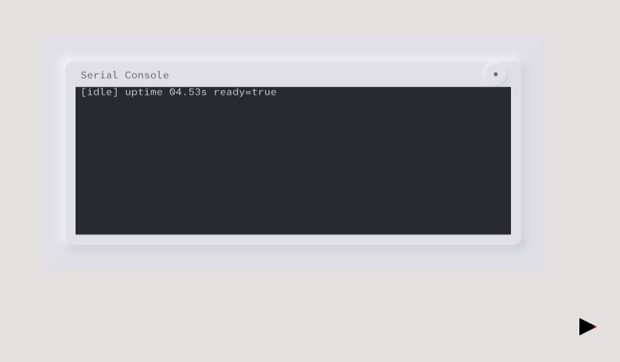
GUI work is underway.